

Open-plan living areas are popular for their spaciousness, but without defined zones, they can feel overwhelming. Here's how to create functional and inviting zones without needing walls or major renovations:
-
Kitchen Island: Acts as a visual and functional divider between the kitchen and other areas.
-
Different Flooring: Use varied materials or rugs to visually separate spaces.
-
Area Rugs: Define zones like the lounge or dining area with rugs.
-
Lighting: Use different lighting styles (e.g., pendants, sconces) to distinguish areas.
-
Furniture Placement: Arrange furniture to create boundaries, like positioning a sofa to separate the lounge from the kitchen.
-
Banquette Seating: A space-saving way to define dining zones while adding storage.
-
Colour Schemes: Use distinct colours or tonal variations to give each area its own identity.
These methods help maintain the open feel while creating structured, purposeful spaces. Whether it's through clever furniture arrangements, lighting tricks, or simple accessories, you can transform your open-plan layout into a well-organised and stylish home.
How to Zone an Open Plan Interior: Living, Dining & Kitchen Design Combo
1. Add a Kitchen Island or Peninsula
A kitchen island or peninsula is a smart way to define spaces in an open-plan home while keeping the layout airy. It serves as both a functional and visual anchor, marking where the kitchen transitions into the living or dining area. You can take it a step further by incorporating seating and well-chosen accessories to enhance this division.
This setup also creates a subtle psychological boundary. Hugo Tugman, Founder of Architect Your Home, explains:
"A visitor will subliminally be aware that as long as they stay away from the 'kitchen side' of the island, they are not in the way of the cook, their place being on the 'coffee side'" [1]
By naturally guiding guests to stay on the "social" side, the kitchen remains a dedicated space for cooking, free from unnecessary interruptions.
Adding bar stools along the island’s edge can further separate the work and social areas, turning it into a casual dining spot. To make hosting even easier, consider placing a small beverage fridge at one end of the island. This way, guests can grab a drink without stepping into the cooking zone.
In smaller or multifunctional spaces, an island with lockable casters offers flexibility, allowing you to adapt the layout as needed while maintaining distinct zones. A stone benchtop can act as a striking visual element, reinforcing the separation between areas.
To tie everything together, coordinate materials across the spaces. Fiona Austin from Austin Design Associates advises:
"Carrying a feature timber veneer from the kitchen through to the entertainment unit in the living room will tie the areas together." [4]
This creates a sense of flow while keeping each area functional and distinct.
For Australian homeowners keen to elevate their open-plan spaces, browse a selection of stylish and practical solutions at Movinghub Shop (https://movinghub.shop) to bring these ideas to life.
2. Change Flooring Materials
Switching up your flooring can work wonders in creating distinct zones within an open-plan space. For example, tiles or polished concrete are perfect for kitchens - they’re tough, easy to clean, and can handle spills and heavy foot traffic. On the other hand, timber or carpet in living areas brings a cosy, welcoming vibe, making the space feel more relaxed and inviting [3].
Using different materials isn’t just practical - it’s a visual cue. Natasha Saroca, a Houzz Australia Contributor, explains:
"Divide an open space into smaller segments by introducing flooring in different materials, colours or patterns, which will create a visual division between the two (or more) areas" [3].
This strategy is a great way to define spaces while keeping that open, airy feel. Unlike physical dividers, it subtly separates zones, maintaining flow and connection throughout the room.
If budget is a concern, hybrid flooring is a smart choice. It combines the waterproof properties of vinyl with the natural look of wood and features a click-lock system that makes installation a breeze. Plus, it can be laid directly over existing tiles, saving on labour costs [10].
For a cohesive look, stick to consistent undertones across your flooring and use varying shades to highlight different zones (following the Rule of 3 [9]). Not ready for permanent changes? Area rugs are a versatile and affordable way to define spaces.
Check out Movinghub Shop (https://movinghub.shop) for a variety of stylish area rugs that can help you shape your open-plan living areas.
3. Place Area Rugs
Area rugs are a simple yet effective way to define different zones in an open-plan space while keeping the overall layout open and airy. They help visually separate areas like the lounge, dining, or even a home office, creating distinct spaces without the need for walls. This approach works beautifully alongside other techniques, such as using varied flooring, to establish clear boundaries within your home.
Jonno, Sales & Marketing Manager at Hunting for George, highlights the impact of rugs:
"By placing a rug on the floor you create a grounding base,"
helping to naturally guide how each zone is used and navigated.
Getting the size right is key when selecting a rug. For dining areas, aim for a rug that extends at least 60 cm beyond the edges of the table to ensure chairs stay on the rug even when pulled out [6]. In living rooms, leave about 40 cm of space between the rug and the walls, and choose one that stretches 20–30 cm beyond the edges of your sofa to maintain a balanced look [11].
Rugs also help absorb noise, which makes them especially useful in busy spaces. For high-traffic areas, consider durable, low-pile rugs that can handle wear and tear [6]. On the other hand, in lounge areas where comfort is a priority, a soft, high-pile rug can add an extra layer of cosiness.
Explore the Movinghub Shop for a wide selection of stylish rugs in various sizes, materials, and patterns to perfectly complement your open-plan design.
4. Use Different Lighting for Each Zone
In open-plan living spaces, lighting plays a crucial role in defining distinct, functional zones. Beyond simply illuminating, it helps visually separate areas, creating a sense of purpose and individuality for each. By treating each zone as if it were its own room, you can craft a unique lighting style that complements its function while enhancing the overall flow of the space.
Jess Hodges, Interior Design Manager at Carlisle Homes, highlights this strategy:
"Lighting is a great way to make each zone feel special. For an appealing, layered lighting scheme, light each area differently, whether that's a pendant over the dining table, downlights in the kitchen or a combination of wall sconces and floor lamps in the lounge." [6]
For instance, a bold pendant light hung 80–90 cm above the dining table can create a cosy, intimate atmosphere, almost like a canopy over the space [12]. In the kitchen, pendant lights positioned 75–90 cm above the benchtop and spaced about 75 cm apart can provide both style and functionality [12]. These low-hanging fixtures naturally draw attention, clearly defining their respective zones.
Having independent controls for lighting in each area allows you to adjust the mood as needed. Ines Tome from the Australian Academy of Interior Design explains:
"This will give you full control of the lighting in your open-plan space allowing you to create different atmospheres depending on how you are using the space at the time." [2]
For example, you might dim the lights in the kitchen while keeping the lounge softly illuminated, subtly "closing off" areas not in use.
Experimenting with different fixture heights can also add depth and character. Use floor lamps to anchor seating areas, wall sconces for a gentle ambient glow, and recessed lights for practical tasks [13]. Bright lighting works best for kitchens where visibility is key, while softer, warmer tones in the lounge invite relaxation and comfort [4].
Transform Your House into a Home
Explore Movinghub Shop’s wide range of home essentials, furniture, and lifestyle products to create your perfect living space.
5. Arrange Furniture to Define Spaces
How you arrange your furniture can completely change the feel of an open-plan area, turning it into a collection of cosy, functional spaces. Instead of pushing furniture up against the walls, group pieces together to create smaller, purposeful zones that act like "rooms within a room."
A simple yet effective trick is to position the back of a sofa to face the kitchen or dining area. This instantly creates a boundary, both visually and physically, marking where the living area begins. L-shaped sofas are especially handy for this - they naturally form a snug corner for lounging while subtly blocking off walkways.
To make these zones even more distinct, try adding a console table behind the sofa. Not only does this enhance the separation, but it also provides a spot for tall accessories like vases or lamps, adding height and weight to the division [5]. Another clever option is to use open-backed bookshelves. They divide the space without cutting off light or obstructing sightlines.
When planning your layout, consider using newspaper to map out where your furniture will go. This helps ensure you leave at least 90 cm of clear passage for easy movement [7]. Imagine where walls might naturally fall if the room were divided - this will help you place your furniture in a way that creates structure while keeping the space open and inviting.
6. Install Banquette Seating
Banquette seating is a clever way to carve out a dining area in compact open-plan spaces. By placing the bench seating flush against the wall, you eliminate the need for the usual 90 cm clearance behind chairs, making it a space-savvy solution [16]. Since most banquette benches are only about 66 cm deep [16], they allow you to create a functional dining nook even in tight spots.
But banquettes are more than just a space-saver. They act as a clear boundary, marking where the dining zone begins and ends. Many designs also come with built-in storage, such as lift-up seats or drawers, perfect for stowing away table linens, seasonal decorations, or even extra kitchenware [15][16]. This dual-purpose feature helps keep your space organised and clutter-free.
"Because a banquette bench can be pushed right up against a wall, less floor space is needed for a seating area." – Caroline McDonald, Ballard Designs [16]
To elevate the look of your dining area, pair banquette seating with a pedestal or trestle-style table and hang a statement pendant light above. This not only defines the dining zone but also adds personality [14][17][18][19]. For a seamless design, consider matching the materials of the banquette base to your kitchen cabinetry or nearby furniture. Add upholstered cushions in coordinating colours to tie the space together [4].
Banquettes come in various configurations - L-shape, U-shape, or straight - making them versatile enough to seat more people, which is especially useful for families [16]. Once a hallmark of retro diners, banquette seating has evolved into a contemporary design choice that combines practicality with a relaxed, lounge-like vibe [18]. It’s a perfect addition to Australian homes, complementing other zoning techniques like strategic furniture placement and lighting.
If you’re looking for a stylish way to maximise your dining space, explore the range of banquette seating options available at Movinghub Shop (https://movinghub.shop). You’re sure to find a piece that fits beautifully into your open-plan living area.
7. Use Different Colours for Each Zone
Colour is a powerful tool for defining spaces in open-plan living areas. By using distinct colour schemes, you can create clear boundaries without the need for walls. For instance, you might opt for soft pastels in the lounge and bold, vibrant shades in the dining area to visually separate the two spaces instantly [3].
The trick lies in finding a balance between separation and flow. Current design trends lean towards using colour and styling to define spaces while avoiding a cold or disjointed look [5][6]. One effective way to achieve this is by keeping a consistent wall colour - like crisp white - throughout the space for harmony, then introducing complementary furniture, rugs, or accessories to give each zone its own distinct vibe [4].
"The secret is to give each zone its own identity, but use a visual device to connect them all together; it could be a similar colour, texture or even a theme." – Louise O'Bryan, Houzz Contributor [4]
For a subtle division, tonal variation works wonders. Instead of stark contrasts, use shades within the same colour family - like a dusty blue rug in the dining area paired with a deep blue velvet chair in the living zone [7]. This approach keeps the space cohesive while defining individual areas. If you prefer a bolder look, consider colour-blocking by painting a feature wall or applying textured wallpaper in a specific zone, such as behind a fireplace or dining table [6]. Highlighting architectural elements like pillars or bulkheads with bold colours can also create a "visual line" to separate spaces, such as the kitchen from the living area [4].
To maintain unity, stick to a primary colour palette with two or three complementary shades [7]. Repeating a specific colour or material across zones can tie everything together. For example, Fiona Austin from Austin Design Associates suggests extending a feature timber veneer from the kitchen to the entertainment unit in the living room for a seamless look [4]. This "separate-but-connected" approach ensures each zone feels unique while the overall space remains cohesive and thoughtfully designed.
Check out stylish accessories at Movinghub Shop to perfect your colour-zoning game.
Comparison Table
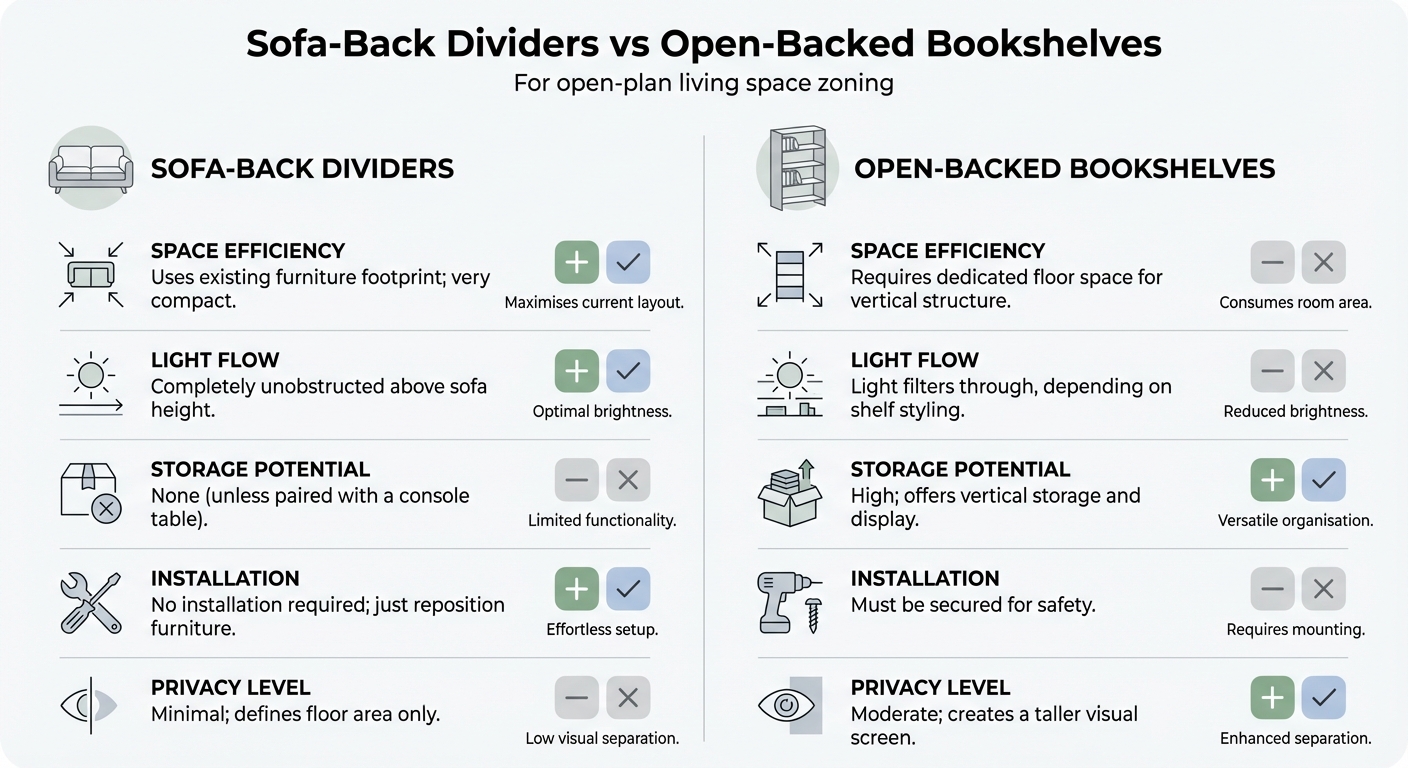
Comparison of Sofa-Back Dividers vs Open-Backed Bookshelves for Open-Plan Zoning
Sofa-Back Dividers vs Open-Backed Bookshelves
When shaping open-plan spaces, choosing the right divider can make all the difference. Two popular options - sofa-back dividers and open-backed bookshelves - offer distinct approaches to defining zones without the need for solid walls. Each has its own strengths in terms of space usage, light flow, and storage potential.
A sofa-back divider is a clever way to repurpose your sofa to create a boundary. Simply positioning the back of your sofa towards another area can subtly mark where one zone ends and another begins [5]. This method is compact and space-saving but doesn’t provide any built-in storage.
On the other hand, open-backed bookshelves introduce a vertical element that not only divides the space but also doubles as storage. These shelves can hold books, decorative pieces, or storage bins, while their open design allows a partial view through to the other side [5]. However, they do take up more floor space and need to be securely anchored to the floor or ceiling for safety reasons [5].
The way light flows through these dividers is another key difference. Open-backed bookshelves let light filter through, but only if the shelves aren’t overcrowded - leaving some gaps allows light to illuminate both the shelves and the neighbouring zone [5][20]. In contrast, sofa-back dividers leave the space above the sofa completely open, ensuring no obstruction to light.
Here’s a side-by-side comparison to help you decide:

For zoning solutions and stylish furniture, check out Movinghub Shop and discover the perfect fit for your open-plan layout.
Conclusion
Creating zones in an open-plan area transforms it into a space that's both practical and inviting. Whether it’s using a kitchen island to mark the cooking zone, layering rugs to define furniture arrangements, or positioning a sofa to suggest an invisible boundary, these techniques help bring structure to an otherwise open layout.
The secret lies in achieving a balance - maintaining visual flow while giving each zone its own identity. Consistent flooring, harmonious colour palettes, and layered lighting ensure the space feels unified, while carefully chosen furniture and accents like rugs or room dividers add definition. A focal point in each zone, such as a standout piece of art or a striking stone benchtop, can further anchor the design and draw the eye.
If you're ready to bring these ideas to life, the Movinghub Shop is a great place to start. From area rugs and modular furniture to bold lighting and stylish dividers, you'll find everything you need to craft a space that’s both functional and stylish. Plus, with a 30-day money-back guarantee and secure checkout, you can experiment with confidence until you create the perfect open-plan layout for your home.
FAQs
How can lighting help define different zones in an open-plan living area?
Lighting can work wonders in defining separate zones within an open-plan living space. Overhead fixtures like pendant lights or chandeliers are perfect for visually anchoring areas like the dining or lounge spaces. These fixtures create a sense of structure and boundaries without relying on physical dividers.
To take it a step further, layering various lighting types - ambient, task, and accent - can elevate both the functionality and mood of each zone. Picture a cosy reading nook illuminated by a floor lamp or a kitchen highlighted by under-cabinet lighting. These thoughtful touches not only clarify the purpose of each area but also add personality to the entire space.
How can I use furniture to define different areas in an open-plan space?
Using furniture to carve out distinct zones in an open-plan layout is both a smart and stylish way to organise your home. For instance, placing a sofa or sectional strategically can clearly separate the living area from the dining or kitchen spaces. Rugs are another fantastic tool - they visually ground and define specific areas, adding texture and warmth.
Bookshelves or open shelving units can double as storage solutions while acting as subtle room dividers. These approaches not only bring a sense of order to your space but also enhance its overall look, creating a layout that's both functional and visually pleasing.
How can flooring choices help define zones in an open-plan living space?
Flooring offers a clever and stylish way to define zones in an open-plan living space. By choosing different materials - like timber for the lounge and tiles for the kitchen - you can visually separate areas without the need for walls. Rugs are another great option, adding both texture and colour to highlight spaces such as dining or relaxation zones.
Switching between flooring types, such as polished timber and carpet, can subtly guide the flow of the room while improving its functionality. These transitions not only help to distinguish each zone but also introduce an element of design, making the space feel intentional and welcoming.